
For investors
The question almost nobody asks: who will you sell this to in five years?
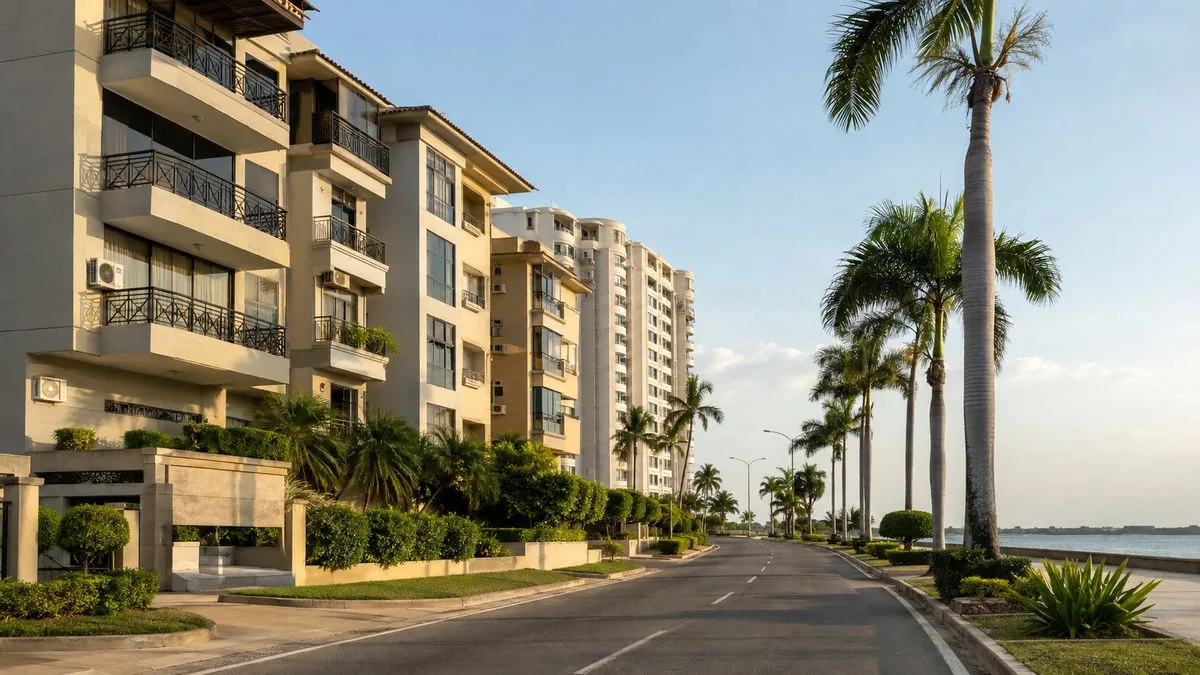
Venezuela has no long term mortgage credit, so your eventual buyer will have to pay cash exactly as you did. That single fact defines the entire exit strategy: the buyer universe is narrow, selling times are measured in months, and only part of the inventory genuinely moves. Better to know it before you enter than after.
Almost every conversation about investing in Venezuela concentrates on the entry price. That is natural, since it is the number that impresses. But a property investment is not judged by what you paid, it is judged by what you can recover and how long that takes. And that is where the Venezuelan market gets demanding.
The root of it: there are no mortgages
The near total absence of long term mortgage credit is the most important structural fact in Venezuelan real estate, and it explains almost everything else.
It has a favourable side, and it is real: without leverage, prices are not inflated and transactions close at consistent values. You are not buying into a credit bubble.
And it has an uncomfortable side: the day you want to sell, your buyer will have to produce the full amount from liquid wealth. That drastically reduces how many people can buy from you.
How long selling actually takes
The timeframes the market works with, by segment, look like this:
| Segment | Time on market |
|---|---|
| Premium Caracas, well priced | 6 to 12 months |
| Premium Caracas, overpriced | 18 to 36 months |
| Mid range Caracas | 12 to 18 months |
| Valencia | 12 to 24 months |
Look at the contrast between the first two rows. The difference between selling in six months and not selling in three years is not the market: it is the asking price. In a cash market the buyer has time and options, and punishes any overpricing without mercy.
The market is split in two
This is the distinction most worth understanding. Venezuelan inventory behaves like two separate markets sharing a city:
- The segment that moves. Properties with independent water, backup power, fibre internet and security. They retain liquidity and hold price.
- The segment that stalls. Grid dependent properties without autonomy. They sit listed for months even when the price looks like a bargain, because the cash buyer knows what is waiting for them.
The practical consequence is counterintuitive: paying more for an autonomous property is usually the better investment than paying less for a dependent one, because what you buy with that difference is the ability to exit when you choose.
What your cash buyer does
It is worth standing in their shoes, since they will determine your final return. Someone paying cash in Venezuela typically:
- Compares several options without hurry, because there is no bank approval with an expiry date.
- Cares more about services than finishes, because they already know what fixing them costs.
- Has documentation checked by a lawyer before negotiating seriously.
- Discards outright any property with incomplete paperwork, because they do not want to inherit a problem.
From this comes the most useful lesson in this article: complete documentation is not paperwork, it is liquidity. Properties with a full file sell faster and inspire more confidence, and that translates into months of difference.
How to buy with the exit in mind
- Buy in the autonomous segment. Water, generator and fibre are not comforts, they are future liquidity.
- Buy formats with broad demand. A two or three bedroom apartment has far more potential buyers than a large singular property.
- Buy in low vacancy areas. If it rents easily it sells easily, because your next buyer may also be an investor.
- Keep the document file complete from day one. Do not wait until you want to sell to organise the paperwork.
- Budget a horizon of five years or more. If your plan depends on selling in two, this market does not fit your plan.
What would change this picture
Only one development can transform Venezuelan market liquidity: the appearance of long term mortgage credit. The day a buyer can finance a purchase over ten or fifteen years, the buyer universe multiplies and selling times shorten structurally. It is the indicator most worth watching, far above any political headline.
Frequently asked questions
How long does it take to sell a property in Venezuela?
It depends on the segment and above all on price. A well priced premium property in Caracas sells in 6 to 12 months, while an overpriced one can take 18 to 36. In the mid range the band runs from 12 to 18 months.
Why is it hard to sell property in Venezuela?
Because there is no long term mortgage credit, so every buyer must pay cash. That drastically reduces the number of people able to buy and lengthens selling times.
Which properties sell fastest in Venezuela?
Those with autonomous services: independent water, backup power, fibre internet and security. The market is split between that segment, which keeps its liquidity, and the grid dependent one, which stalls even at low prices.
Does documentation affect how fast a property sells?
Yes, directly. Properties with a complete document file sell faster because cash buyers discard any property with incomplete paperwork straight away.
What would improve liquidity in the Venezuelan market?
The appearance of long term mortgage credit. The day financing over ten or fifteen years exists, the buyer universe multiplies and selling times shorten structurally.
Ready to take the step?
Let's talk about your situation, no strings attached. I reply personally within 24 hours.
Request a private consultation Message me on WhatsApp